Hilbrandt Boschma's work revising the taxonomy of the Milleporids is a monument to his painstaking study of the morphological species specific characters.
The link above directs to a wikipedia page that presents a general biographical picture of his career. As one may see from a casual reading of this Wikipedia entry, Boschma's career went far beyond the painstaking work of revision of the taxonomy of Millepora spp.
Lu Eldredge, a professor of mine at the University of Guam, told of Boschma hiding in between shelves at the Rijksmuseum at Leiden, from the Nazi's during the occupation of The Netherlands. Due to my interest in the Holocaust---born during my formative years, as I read Mein Kampf and the stories of the exodus from Germany to Israel---this story of Boschma's trials and tribulations has remained with. I recently Googled for more information about his life, and ultimately stumbled upon the accounts in Wikipedia.
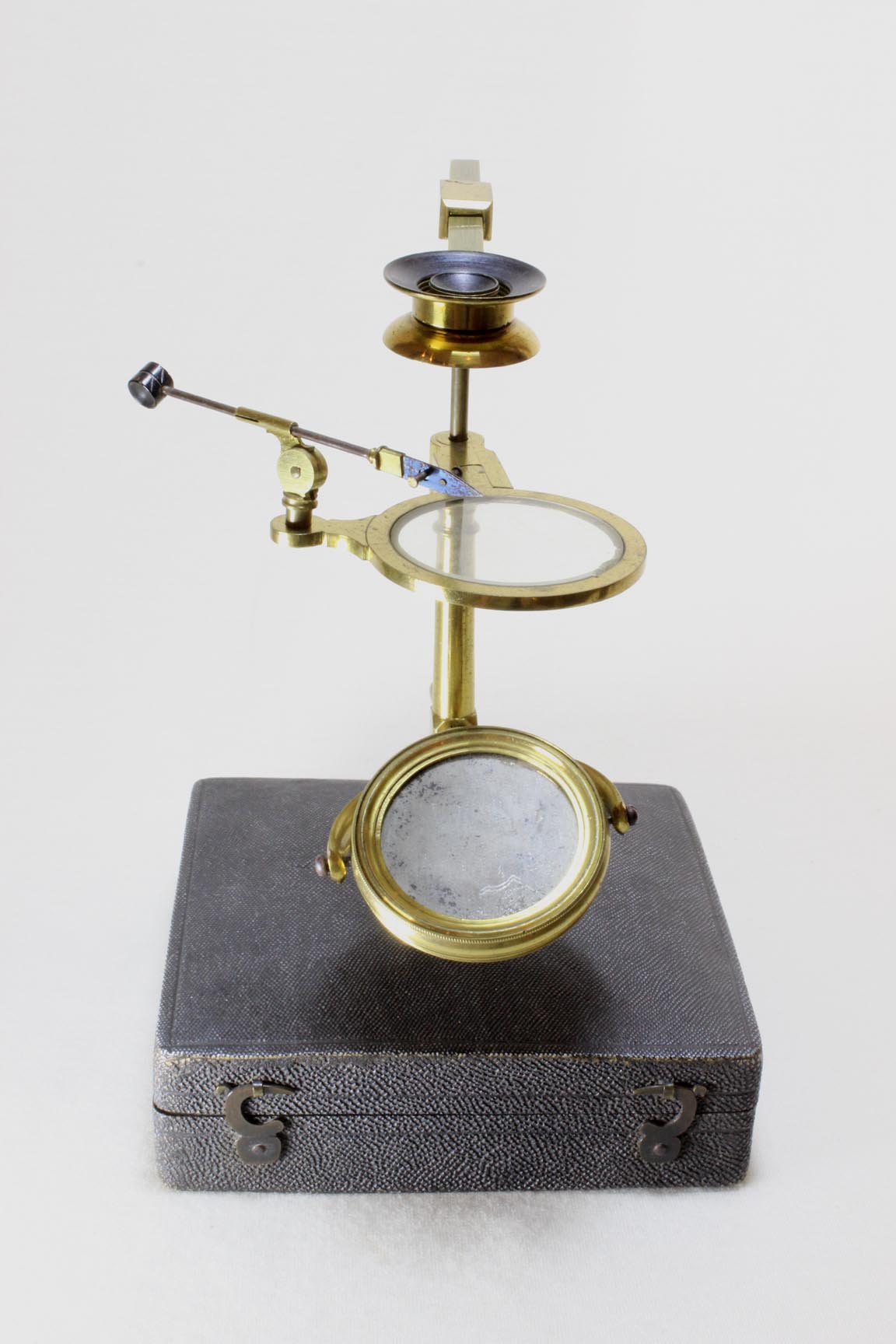
His role at the Rijksmuseum was far more crucial than his zoological work might suggest. He was, at some point during the occupation, director of the museum. Important in my mind was to learn he had saved the scientific instruments in the institution, concealing them---apparently in a manner similar to the way, as I had I heard from Professor Eldredge, he hid his person from the Nazis.
I wonder how, as director of the Museum he could have kept himself concealed during those years.
A PDF of his Eulogy is located here, in Dutch:
https://dwc.knaw.nl/DL/levensberichten/PE00004104.pdf
I ran this pdf through Google Translate, by way of a convoluted sequence of processes: running an OCR on the dutch pdf via gscan2pdf, saving the German text file, opening this on Google Docs, and finally using Google Translate. The next step would be to use LaTeX to clean up the translation, format and typset; however, I skipped it in this instance. It would probably be faster and easier on Apple Infrastructure, but freedom from the numerous encumbrances of that approach is worth the learning curve and effort, using the wonderful tools of GNU/Linux.
The English machine translated version is long. It is appended temporarily at the end of this post. (Perhaps I will link to a pdf at some point, depending on space available, should I finally clean it up).
Niko Tinbergen

An excerpt from a paper about Tinbergen is of great interest; it provides context, as well as insight into Niko Tinbergen, his work, and his trials and tribulations. Freedom fighting scientists: perhaps a lesson for our time.
World War II. In May 1940 the Netherlands were overrun by the German forces. In 1941 most of the teaching staff of Leiden University resigned in protest against the treatment of their Jewish colleagues, and in 1942 many of them, including Tinbergen as well as many other of the most prominent figures in Dutch society (professors, cabinet ministers), were taken hostage by the Germans. They were to be the subject for reprisals after actions by the Dutch underground; in the end, some twenty of them were shot. The hostages were interned in a former training college for priests in Sint-Michielsgestel in the south of Holland.
Tinbergen was to spend two years in the hostage camp, in reasonable comfort but with the threat hanging over him. The inmates organized lectures, plays, and concerts, and there was considerable intellectual activity as well as political discussion. Tinbergen was able to write. One product of that time was a text in Dutch, Inleiding tot de diersociologre (Introduction to Animal sociology), published as a 184-page paperback after the war, in 1946. It was visually appealing, with many of his drawings, but it was never much of a success, having been written in a rather schoolmasterly style. There was a kaleidoscope of social behavior, with several arguments about behavior organization as in his previous publications. As an interesting kind of throwback, in places Tinbergen insisted that animals behave for the good of the species. Given the context in which it was written, it was not surprising that the author was not in top form. Another result of his hostage camp efforts was a series of handwritten and richly illustrated booklets about animals, for his children at home. Two of these were later published in English: Kleew (1947), about gulls, and The Tale of John Stickle(1954), about the behavior of sticklebacks.
After Tinbergen was finally released from the hostage camp in September 1944, he would spend seven more months under the German occupation, living with his family close to his field study sites near Hulshorst. Life in Leiden was too difficult in that period, known as the “hunger winter,” with serious shortages.